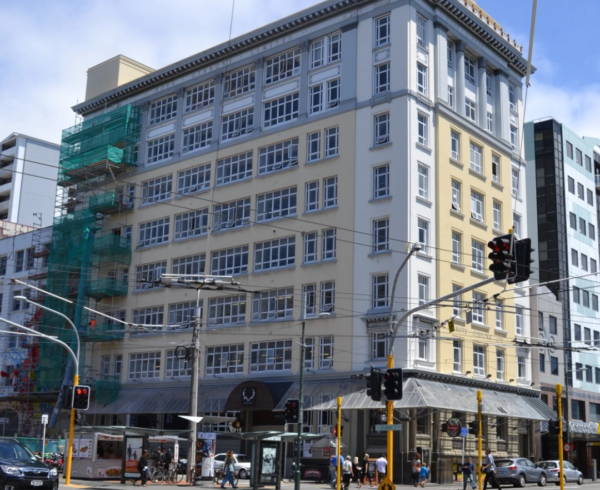
Located in the heart of Wellington, Gibbons Hotel is a modern interpretation of the classic New Zealand pub – a central gathering place for locals, corporates, and visitors alike.
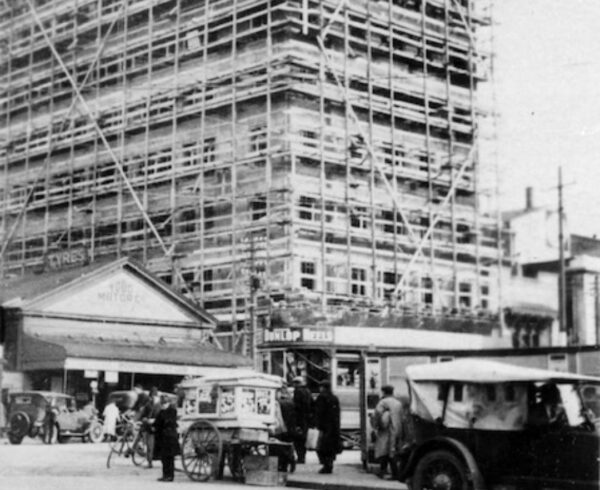
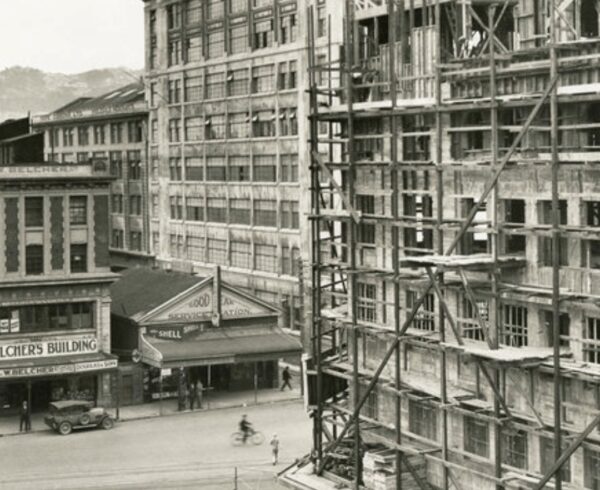
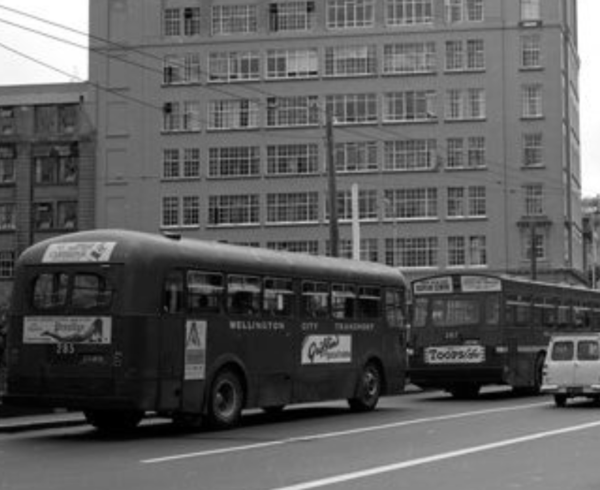
Gibbons Hotel is proudly housed within the historic Hope Gibbons Building, a landmark with significant heritage “townscape” value due to its prominent position on the corner of Dixon and Taranaki Streets. Constructed in two stages – first in 1916 and later expanded in 1925–26 – the building has long played an important role in Wellington’s commercial and social history.
The building’s historic significance is closely tied to Hope Gibbons Limited, a family-run company whose influence extended across brewing, transport, and commerce in New Zealand. For many years, the building also housed government departments and vital public records, reflecting its importance within the city.
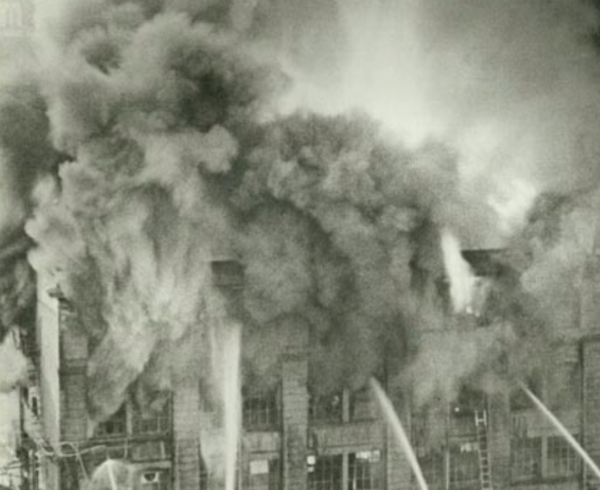
In 1952, the Hope Gibbons Building was the site of a devastating fire that became a turning point in New Zealand’s archival history. On 29 July, a fire broke out in a rear building after industrial thinners ignited, spreading rapidly through the eight-storey office block. The blaze resulted in the loss of irreplaceable government and public documents from departments including Lands and Survey, Marine, Labour, Public Works, Immigration, Māori Affairs, Agriculture, and Broadcasting.
The scale of the destruction highlighted the need for better protection of public records and directly contributed to the introduction of the Archives Act in 1957, followed by the establishment of a national archive to safeguard New Zealand’s historical documents.
So who was the man the building was named for – Hope Gibbons?
A Wellington City Council Heritage Survey notes that “Hope Gibbons” was the name given to members of the second and third generations of the Gibbons family, a successful merchant family who arrived in New Zealand in the mid-19th century. Hopeful Gibbons (senior), one of twelve children of Robert and Sarah Gibbons, arrived in New Zealand in 1861 and began his working life at just sixteen. He rose to prominence through brewing, establishing the Patea Brewery before acquiring the Wanganui Brewery, and went on to become a respected businessman, politician, and local identity.
His eldest son, Hopeful Barnes Gibbons (1882–1955), led the company’s expansion into Wellington in 1910. Under the direction of architect Joseph Dawson – who worked closely with the family – the first section of the Hope Gibbons Building was erected in 1916, intended as part of a larger commercial complex. Although requisitioned for the war effort soon after completion, the building was later returned and expanded. By 1926, it stood as Wellington’s tallest building for several decades.
Today, Gibbons Hotel carries this legacy forward.
By taking the Gibbons family name and residing within this landmark building, the venue pays tribute to a tradition of hospitality, craftsmanship, and community leadership. Gibbons Hotel honours its heritage with a modern sensibility – grounded in place, guided by quality, and built to last.
Whether it’s catching the game at Four Kings, winding down after work, or watching the sunset from Dirty Little Secret’s rooftop, Gibbons Hotel is the central hub that ties it all together – a social headquarters for Wellington, full of character, connection, and life.
Photos sourced:
1. Hope Gibbons Building under construction. France, Thelma Edith Minnie, 1907-2000 : Photographs. Ref: PAColl-0125-01. Alexander Turnbull Library, Wellington, New Zealand. /records/23122866
2. The intersection of Taranaki Street, Dixon Street, Manners Street and Courtenay Place. The Levy Building is shown under construction on the right (corner of Taranaki Street and Manners Street) with the Hope Gibbons building behind it (center-right) c. 1930 Wellington City Libraries
3. Archives New Zealand – Te Rua Mahara o te Kāwanatanga. Reference: ARCH 458 Box 1 c AR1/5
4. Digital NZ. Victoria University of Wellington. Tapuaka – Heritage and Archive Collections Black and white photograph of buses and cars on city street, with city buildings.1969c – 1970c wgtn.recollect.co.nz/nodes/view/4350
5. Image: WCC – Charles Collins, 2015. Wellington City Heritage